Constitutional Court rules: no search warrant makes a search illegal
If the police do not have a search warrant then the search is illegal according to a report we read on Below The Lion.
This information has come to light after the ruling in the case of drugs found in the house of Grace Kunjana.
In what seems like a win for drug reformists, the constitutional court has agreed that you have every legal right to refuse a search of yourself, car, house, or belongings without a search warrant.
The Grace Kunjana case was referred to the constitutional court by the director of public prosecutions, the Western Cape minister of justice, and the minister of police.
Almost a half ton of hard drugs were found at Grace Kunjana’s house and her case contested that the search was done without a search warrant. Searches without warrants are unconstitutional and the court agreed with this.
While this may be positive in the defendant’s case it doesn’t allow others previously charged to use this loophole.
It may however affect the outcome of cases in the future where search warrants were not issued in searches that resulted in drugs being found.
Outdoor festival scene
The festival scene is big all over the world and of course here in South Africa too, across varying genres. Many revelers attend these outdoor parties and take with them many a party drug. Police presence at outdoor parties continues to grow and random searches without warrants have been reported, although these cases are isolated.
So if people partying and using drugs find themselves being searched and consequently arrested without a search warrant this is actually a violation of their constitutional rights.
While the impact of the constitutional court’s ruling leaves the impression that drug reform is a modern possibility, it still hasn’t entirely cleared the way for people to have the freedom to do what they want.
This may sound like good news but don’t get too comfortable yet, if you are partial to recreational substances. There are cops who follow the law and those who don’t.
Technically a search of your person or vehicle should only be plausible if the police officer can provide evidence as to what incited the search. E.g. a roach lying in your ashtray, or the smell of dagga coming out of your car when he/she stops you, etc.
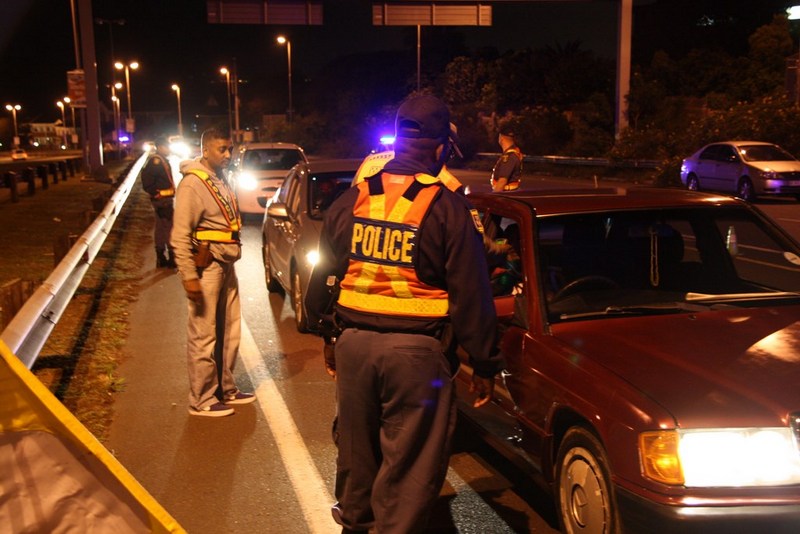
What about a roadblock?
For a roadblock to be legal it has to have been signed off by a magistrate and the purpose of the roadblock must be very clearly stated.
For example if the roadblock was being held because they were looking for a fugitive who had escaped from a prison, then anybody or any vehicle that matches who/what they are looking for can be searched.
Similarly if the roadblock is being held specifically to search for drugs, all the police officer actually needs to state is that you and your buddies in the car looked like you were high, or that the car smelled like dagga etc.
Then the search without a specific search warrant is more than likely valid in these instances since the magistrate’s warrant is a blanket one specifically to search for illegal substances.
But they still need to tell you why they want to search you or your car.
One should always ask the officer what it is about you and your friends or your car that provoked the search and have that information on record. Random searching is a violation of one’s rights unless good reason is provided.
IMPORTANT FOOTNOTE:
The information we offered above is simply an opinion on the matter and from previous experiences shared by event promoters we spoke to. This has not been verified with any legal team.

